AI Agents in 2026: How Artificial Intelligence Is Transforming the Future of Technology
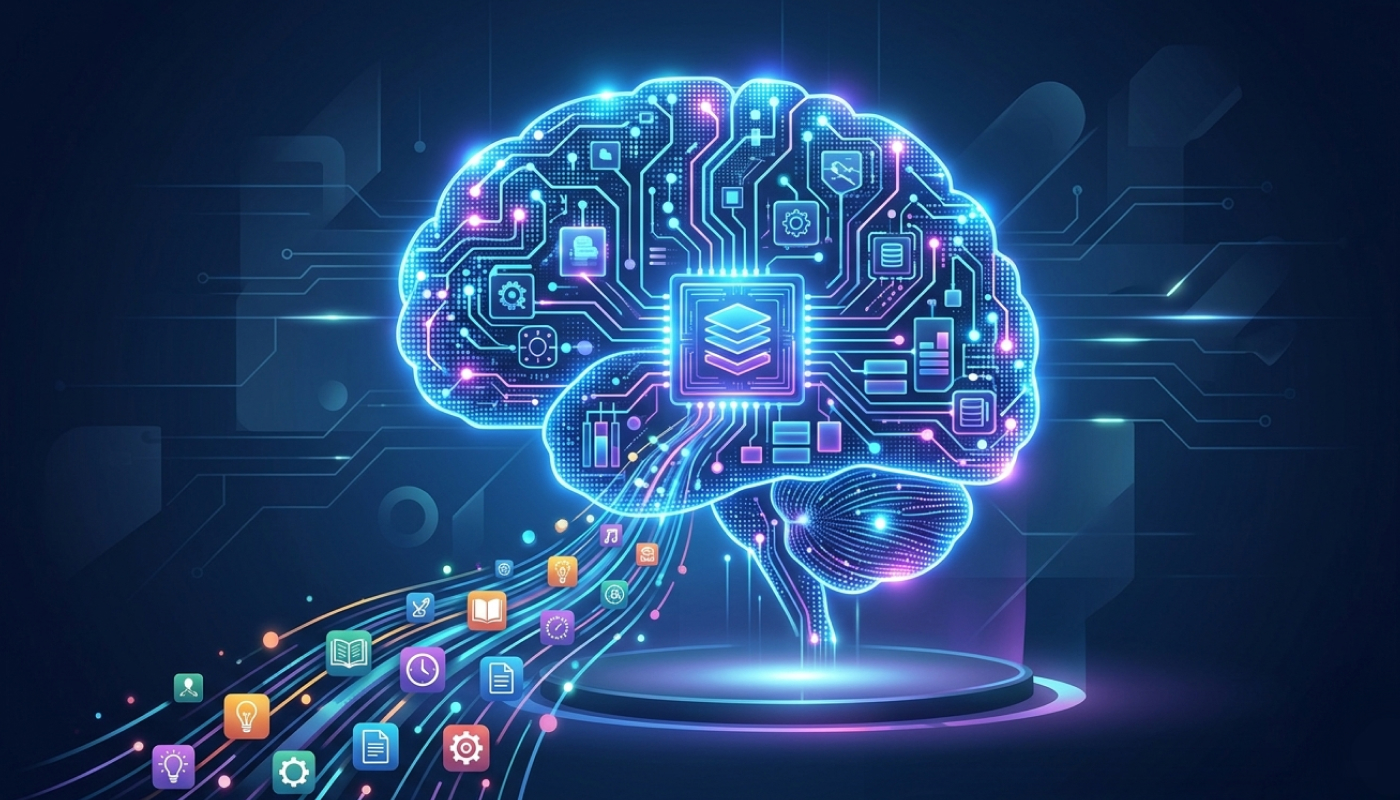
Artificial intelligence is entering a new phase. Instead of simply answering questions, modern AI systems are increasingly being designed to perform tasks, operate digital tools, analyze information, and help people complete complex workflows.
One of the most important developments in this transformation is the rise of AI agents. These systems can work toward a defined goal by planning steps, using connected tools, and adjusting their approach based on results. Businesses are exploring AI agents to improve productivity, reduce repetitive work, and deliver better customer experiences.
As technology advances in 2026, the biggest challenge is no longer just developing more capable AI systems. Organizations must also ensure that these systems remain secure, reliable, affordable, and under human supervision.
What Are AI Agents?
AI agents are software systems that can use artificial intelligence to carry out tasks with varying degrees of independence.
Traditional chatbots mainly respond to user questions. AI agents can go further by interacting with software, retrieving information, organizing tasks, and executing approved actions.
For example, a business might use an AI agent to research potential customers, summarize relevant information, prepare personalized email drafts, and organize follow-up activities. A human can then review the results before anything is sent.
Depending on their permissions and technical capabilities, AI agents may assist with:
- Research and information gathering
- Customer support and routine inquiries
- Software development and debugging
- Data analysis and reporting
- Marketing research and content planning
- Administrative and business workflows
However, these capabilities vary between systems. An AI agent should not automatically be assumed to perform every task accurately or without human assistance.
Why AI Agents Are Becoming a Major Technology Trend
The technology industry is increasingly moving from conversational AI toward systems that can take action.
Organizations want AI to do more than generate text. They want it to connect information, interact with existing business tools, and help complete useful work.
Recent industry analysis highlights growing interest in agent-based software, specialized AI models, and systems that coordinate multiple agents to solve complicated problems.
For businesses, this creates an opportunity to automate selected workflows. For developers, it opens new possibilities for building software that can assist with research, testing, coding, and troubleshooting.
Yet adoption remains challenging. Companies must understand implementation costs, establish clear permissions, and measure whether AI produces meaningful business results.
How AI Agents Could Transform Businesses
1. Smarter Customer Support
AI agents can help customer service teams answer common questions, summarize customer histories, and direct requests to the right department.
When integrated with approved business systems, they may also help users complete routine processes.
Human employees remain important for sensitive complaints, unusual situations, and decisions requiring judgment or empathy.
2. Faster Software Development
AI-powered development tools can assist programmers with generating code, explaining unfamiliar systems, identifying potential errors, and writing tests.
Some development systems are also exploring coordinated workflows in which multiple AI agents handle different parts of a project.
These tools can help developers work more efficiently, but generated code still requires testing, security reviews, and human oversight.
3. More Efficient Marketing
Marketing teams can use AI to analyze search intent, organize keyword research, develop content outlines, summarize competitors, and prepare campaign reports.
AI agents may connect these activities into a more organized workflow, reducing the time spent switching between applications.
However, original insights, factual verification, editorial judgment, and a genuine understanding of customers remain essential for producing high-quality marketing.
4. Better Business Data Analysis
Businesses generate large amounts of information through websites, sales platforms, customer support systems, and marketing campaigns.
AI tools can help organize this information, identify patterns, and prepare summaries for decision-makers.
The value depends on data quality, system integration, and appropriate access controls. Businesses should verify important conclusions rather than treating every AI-generated analysis as correct.
The Growing Importance of AI Security
As AI systems gain access to more tools and information, cybersecurity becomes increasingly important.
An AI agent with permission to read files, access customer records, or interact with online services may create risks if its instructions, permissions, or connected systems are not properly controlled.
Technology companies and security researchers have raised concerns about unintended actions by advanced AI systems. These concerns reinforce the need for stronger safeguards as organizations expand their use of automation.
Businesses can reduce risks by following several practical principles:
- Give AI agents only the permissions they need.
- Require human approval for sensitive or irreversible actions.
- Keep confidential information protected.
- Monitor agent activity and maintain useful audit logs.
- Test systems in restricted environments before wider deployment.
- Establish clear procedures for stopping an agent when something goes wrong.
Security should be part of the design process rather than an afterthought.
Will AI Agents Replace Human Workers?
The growing use of AI has raised questions about employment and the future of work.
AI agents may automate certain repetitive activities, allowing employees to focus more on problem-solving, communication, creativity, and strategic decisions. Some roles may change substantially, while new opportunities may emerge in AI implementation, software engineering, cybersecurity, and workflow management.
The impact will vary by industry, occupation, and the way organizations adopt the technology.
Rather than assuming that AI will replace every worker, businesses and professionals should focus on understanding which tasks can be automated and which still require human expertise.
Workers can prepare by developing digital skills, learning to use AI tools responsibly, improving analytical abilities, and strengthening communication and critical-thinking skills.
The Challenges Businesses Must Overcome
Despite its potential, AI agent adoption comes with practical challenges.
Reliability: AI systems can misunderstand instructions, make incorrect assumptions, or produce inaccurate results.
Cost: Complex workflows may require substantial computing resources, software subscriptions, and ongoing monitoring.
Privacy: Access to business documents and customer information must be carefully controlled.
Integration: Connecting AI systems to existing software can require technical expertise and process changes.
Accountability: Businesses need clear rules about who approves actions and who is responsible when an automated system makes a mistake.
A successful AI strategy should therefore begin with a specific business problem rather than adopting AI simply because it is a popular technology trend.
How Small Businesses Can Start Using AI
Small businesses do not need to automate their entire operations immediately. A more practical approach is to begin with a low-risk, repetitive task.
For example, a company could start by using AI to summarize meeting notes, organize research, draft customer service responses, or analyze non-sensitive business data.
The next step is to measure the results. Has the process become faster? Has quality improved? Are employees spending less time on repetitive work? Are the costs reasonable?
If the results are positive, the business can gradually expand to more advanced workflows while introducing stronger controls where needed.
This approach helps organizations gain experience without making unnecessary investments or giving automated systems excessive access.
What Is the Future of AI Agents?
The future of AI agents will likely depend on improvements in reasoning, tool integration, reliability, and security.
More specialized models may help organizations select systems that are better suited to particular tasks. AI tools running locally on personal computers could also provide new options for processing certain information without sending every request to a cloud service.
Meanwhile, coordinated AI systems may help complete workflows involving research, software development, data analysis, and business operations.
However, greater capability does not automatically mean greater reliability. The most successful systems will need to combine useful automation with clear boundaries, transparent costs, and appropriate human oversight.
For technology companies, startups, and established businesses alike, the opportunity is significant—but responsible implementation will determine how much value these tools actually deliver.
Conclusion
AI agents represent an important development in the evolution of artificial intelligence. By moving beyond simple question-and-answer interactions, they offer new ways to automate tasks, support employees, and improve digital workflows.
Their long-term impact will depend on more than technical progress. Security, privacy, affordability, reliability, and human judgment will remain central to successful adoption.
For businesses and professionals, the best strategy is to understand the technology, experiment with practical applications, and build the skills needed to work effectively alongside AI.
The future of technology will not be defined by automation alone. It will be shaped by how intelligently and responsibly people use it.
💬 Community Discussion
0 Comments